 EN
EN


The retail landscape has undergone a significant transformation in recent years, with sustainability and brand visibility becoming paramount concerns for businesses across all industries. Among the most notable changes is the widespread adoption of eco-friendly packaging solutions, particularly the increasing popularity of non-woven bags in retail and promotional campaigns. These versatile carriers have emerged as a preferred choice for forward-thinking companies seeking to balance environmental responsibility with effective marketing strategies.
The surge in non-woven bag adoption reflects a broader shift toward sustainable business practices and consumer consciousness about environmental impact. Retailers and promotional agencies are recognizing that these innovative bags offer superior durability, customization options, and brand exposure compared to traditional plastic alternatives. As consumer preferences continue to evolve toward environmentally responsible products, businesses are discovering that non-woven bags represent an ideal intersection of functionality, sustainability, and marketing effectiveness.
Environmental Benefits Driving Market Adoption
Sustainable Manufacturing Process
The production of non-woven bags involves a manufacturing process that generates significantly less environmental impact compared to traditional plastic bag production. These bags are typically made from polypropylene or other synthetic materials that can be processed without the need for weaving, resulting in reduced energy consumption and waste generation during manufacturing. The non-woven fabric creation process eliminates many of the chemical treatments and water usage requirements associated with traditional textile production.
Manufacturing facilities producing non-woven bags often report lower carbon emissions and reduced water consumption per unit produced. The streamlined production process requires fewer raw materials and generates less manufacturing waste, making it an attractive option for companies committed to reducing their environmental footprint. Additionally, the efficiency of non-woven bag production allows manufacturers to meet growing demand while maintaining sustainable practices throughout their operations.
Recyclability and Disposal Advantages
One of the most compelling environmental advantages of non-woven bags is their recyclability and responsible disposal options. Unlike traditional plastic bags that can take hundreds of years to decompose, non-woven bags can be recycled through existing plastic recycling programs or safely incinerated without releasing toxic gases. This characteristic addresses growing consumer and regulatory concerns about plastic waste accumulation in landfills and natural environments.
The recyclable nature of non-woven bags aligns with circular economy principles, allowing materials to be repurposed into new products rather than contributing to waste streams. Many recycling facilities now accept non-woven bags alongside other polypropylene products, creating a closed-loop system that reduces the need for virgin materials in future production cycles. This recyclability factor has become a significant selling point for retailers seeking to demonstrate their commitment to environmental stewardship.
Superior Durability and Reusability Features
Enhanced Load-Bearing Capacity
The structural integrity of non-woven bags far exceeds that of traditional plastic shopping bags, making them ideal for carrying heavier items and multiple products. The fabric construction distributes weight evenly across the bag's surface, reducing stress points that typically lead to tearing or failure in conventional bags. This enhanced durability translates to improved customer satisfaction and reduced bag replacement costs for retailers.
Testing has demonstrated that quality non-woven bags can support loads of 10-15 kilograms without structural failure, compared to the 2-3 kilogram limit of standard plastic bags. This load-bearing capacity makes them particularly valuable for grocery retailers, bookstores, and other businesses where customers frequently purchase multiple or heavy items. The reinforced handles and seams characteristic of well-manufactured non-woven bags contribute significantly to their superior performance under stress.
Long-Term Usage and Brand Exposure
The reusability of non-woven bag options provides extended brand exposure opportunities that traditional single-use bags cannot match. Customers often reuse these bags for multiple shopping trips, grocery storage, or other household purposes, creating ongoing visibility for the printed brand messages and logos. This extended usage period amplifies the return on investment for promotional campaigns and retail branding initiatives.
Market research indicates that high-quality non-woven bags are typically reused 15-20 times before being discarded, compared to the single-use nature of conventional plastic bags. Each reuse represents a new opportunity for brand exposure in different environments and contexts, from shopping centers to offices and social gatherings. This extended lifecycle makes non-woven bags particularly valuable for companies seeking to maximize their marketing reach and maintain top-of-mind awareness among target audiences.
Customization and Branding Opportunities
Advanced Printing Capabilities
The fabric structure of non-woven bags provides an excellent surface for various printing techniques, enabling businesses to create vibrant, durable brand presentations that maintain their appearance throughout the bag's lifetime. Screen printing, heat transfer, and digital printing methods all work effectively on non-woven materials, allowing for complex designs, multiple colors, and photographic-quality images to be reproduced with exceptional clarity and longevity.
Professional printing on non-woven bags can achieve color accuracy and detail levels that surpass those possible on traditional plastic surfaces. The porous nature of the non-woven fabric allows inks to penetrate and bond effectively, creating prints that resist fading, cracking, or peeling even after repeated use and washing. This durability ensures that brand messages remain visible and professional-looking throughout the bag's extended usage period.
Design Versatility and Style Options
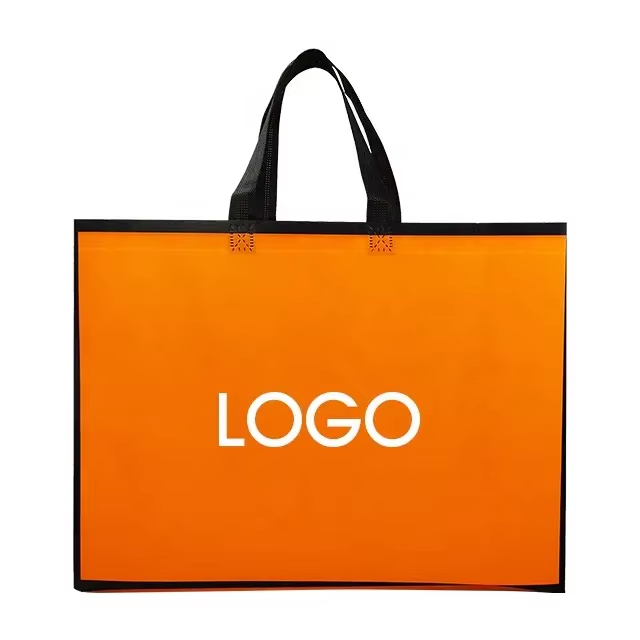
Non-woven bags offer exceptional design flexibility, with manufacturers able to produce them in virtually any color, size, or configuration to meet specific brand requirements and functional needs. Handle options range from short loops suitable for hand carrying to longer straps designed for shoulder use, while size variations accommodate everything from small promotional items to large shopping expeditions.
The material properties of non-woven fabric allow for various finishing techniques, including lamination for water resistance, gusseted sides for increased capacity, and specialized closures such as zippers or velcro attachments. These customization options enable businesses to create unique, functional products that align with their brand identity while meeting specific customer needs and usage scenarios.
Cost-Effectiveness in Business Operations
Competitive Manufacturing Costs
The production economics of non-woven bags have become increasingly favorable as manufacturing processes have been optimized and production volumes have increased. Bulk purchasing arrangements often result in per-unit costs that are competitive with traditional plastic bags while providing significantly greater value through enhanced durability and reusability. The efficiency of modern non-woven bag production lines enables manufacturers to offer attractive pricing for large orders.
When calculating total cost of ownership, many businesses find that non-woven bags provide superior value despite potentially higher initial costs. The extended usage life and enhanced customer satisfaction associated with quality non-woven bags often justify the investment through improved brand perception and reduced replacement frequency. Volume discounts and efficient logistics further enhance the economic attractiveness of these sustainable alternatives.
Marketing Return on Investment
The extended visibility period of non-woven bags creates exceptional marketing value for businesses investing in promotional campaigns. Unlike traditional advertising media with limited exposure periods, branded non-woven bags continue generating impressions throughout their useful life, often reaching new audiences as they are reused in different contexts and locations.
Cost per impression calculations for non-woven bag promotions frequently demonstrate superior value compared to traditional advertising channels. The combination of extended usage periods, high visibility, and positive brand associations created by sustainable practices contributes to marketing efficiency that justifies the investment for companies across various industries and market segments.
Regulatory Compliance and Market Trends
Environmental Legislation Impact
Increasing government regulations targeting single-use plastic bags have created strong market incentives for retailers to adopt sustainable alternatives like non-woven bags. Legislation in numerous jurisdictions now restricts or heavily taxes traditional plastic bags, making reusable alternatives not just environmentally responsible but also economically necessary for compliance.
Regulatory trends indicate continued tightening of restrictions on disposable plastic products, with many regions implementing comprehensive bans or significant usage fees. Businesses that proactively adopt non-woven bag solutions position themselves ahead of regulatory changes while demonstrating commitment to environmental responsibility that resonates with increasingly conscious consumers.
Consumer Preference Evolution
Market research consistently shows growing consumer preference for businesses that demonstrate environmental awareness through sustainable practices and products. Non-woven bags serve as visible symbols of corporate responsibility that can influence purchasing decisions and brand loyalty among environmentally conscious consumers.
The shift in consumer attitudes toward sustainability has created competitive advantages for early adopters of non-woven bag solutions. Businesses that integrate these products into their operations often report improved customer satisfaction scores and enhanced brand reputation, particularly among younger demographics that prioritize environmental considerations in their purchasing decisions.
Implementation Strategies for Businesses
Supplier Selection and Quality Standards
Successful implementation of non-woven bag programs requires careful supplier selection to ensure consistent quality, reliable delivery, and competitive pricing. Businesses should evaluate potential suppliers based on their manufacturing capabilities, quality control processes, customization options, and ability to meet volume requirements within specified timeframes.
Quality standards for non-woven bags should encompass material specifications, construction durability, printing quality, and handle strength testing. Establishing clear quality criteria and conducting regular supplier audits helps ensure consistent product quality that reflects positively on the brand while meeting customer expectations for durability and functionality.
Integration with Marketing Campaigns
Effective integration of non-woven bags into broader marketing strategies requires coordination between procurement, marketing, and retail operations teams. Timing bag production with promotional campaigns, seasonal events, or product launches maximizes marketing impact while ensuring adequate inventory levels for anticipated demand.
Strategic distribution of branded non-woven bags through multiple channels, including retail locations, trade shows, and promotional events, amplifies brand exposure and reinforces marketing messages. Coordinating bag designs with other marketing materials creates cohesive brand presentations that enhance recognition and recall among target audiences.
FAQ
How long do non-woven bags typically last with regular use?
High-quality non-woven bags typically last 12-24 months with regular use, depending on the frequency of use and load requirements. Most users report getting 15-20 uses from a single bag before wear becomes noticeable. The fabric construction and handle reinforcement significantly impact durability, with professionally manufactured bags offering superior longevity compared to lower-quality alternatives.
Are non-woven bags completely waterproof for all applications?
Standard non-woven bags offer water resistance but are not completely waterproof unless specially treated with lamination or coating. The fabric structure provides protection against light moisture and spills, making them suitable for most retail and promotional applications. For applications requiring complete water protection, laminated non-woven bags are available with enhanced moisture barriers.
What is the typical minimum order quantity for custom branded non-woven bags?
Minimum order quantities for custom branded non-woven bags typically range from 1,000 to 5,000 pieces, depending on the manufacturer and customization requirements. Larger orders generally result in better per-unit pricing and more favorable terms. Some suppliers offer lower minimum quantities for standard sizes and colors, while complex customizations may require higher minimum orders to justify setup costs.
Can non-woven bags be safely washed and reused multiple times?
Yes, most non-woven bags can be safely hand-washed or machine-washed on gentle cycles, though care should be taken with printed designs. Air drying is recommended to maintain shape and prevent shrinkage. The fabric typically maintains its structure and appearance through multiple wash cycles, making these bags practical for long-term reuse in various applications.